Compare Google Ads vs Meta Ads for lead generation. Learn differences, costs, targeting, ROI, and discover which advertising
Google Ads vs Meta Ads – Which Generates Better Leads?
- Home
- Google Ads vs Meta Ads – Which Generates Better Leads?
Digital Marketing
 By Abhilasha Hayaran
July 22, 2026
By Abhilasha Hayaran
July 22, 2026
Google Ads vs Meta Ads – Which Generates Better Leads?
By Abhilasha Hayaran
July 22, 2026
Digital advertising has become one of the most effective ways to generate leads, increase website traffic, and boost sales. However, one question every business owner asks is:
Should I invest in Google Ads or Meta Ads?
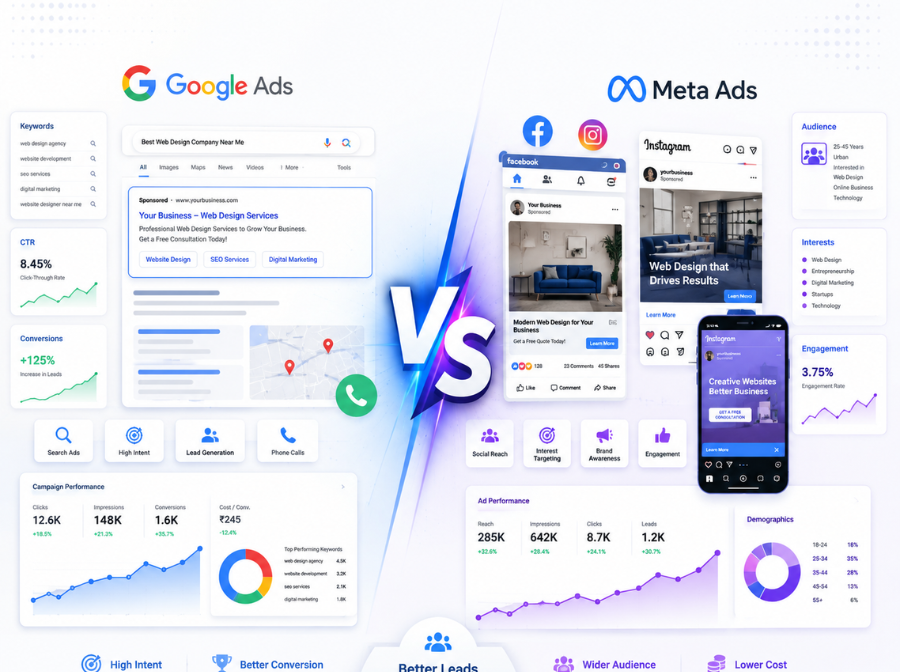
Both platforms are incredibly powerful, but they work differently. Google Ads captures people actively searching for products or services, while Meta Ads (Facebook & Instagram) help businesses create demand by reaching highly targeted audiences.
So, which platform generates better leads?
The answer depends on your business type, marketing goals, and target audience.
In this guide, we’ll compare Google Ads vs Meta Ads in detail so you can choose the right platform for maximum ROI in 2026.
What is Google Ads?
Google Ads is Google’s online advertising platform where businesses can display ads on:
- Google Search
- YouTube
- Google Display Network
- Gmail
- Google Shopping
- Google Maps
The biggest advantage of Google Ads is high purchase intent.
When someone searches:
- Best Website Designer in Gwalior
- Buy Laptop Online
- Dentist Near Me
They already want a solution.
Google simply shows your business at the top of search results.
This is why Google Ads often generates highly qualified leads.
What are Meta Ads?
Meta Ads include advertising on:
- Messenger
- Audience Network
Unlike Google Ads, users aren’t searching for products.
Instead, Meta shows advertisements based on:
- Interests
- Age
- Location
- Behavior
- Shopping habits
- Online activity
Meta Ads help businesses create awareness and generate demand before customers actively search.
Google Ads vs Meta Ads: Quick Comparison
| Feature | Google Ads | Meta Ads |
|---|---|---|
| User Intent | High | Medium |
| Best For | Lead Generation | Brand Awareness |
| Search Based | Yes | No |
| Interest Targeting | Limited | Excellent |
| Purchase Intent | Very High | Moderate |
| CPC | Higher | Lower |
| Conversion Rate | Higher | Medium |
| Audience Discovery | Moderate | Excellent |
| Local Businesses | Excellent | Good |
| E-commerce | Excellent | Excellent |
How Google Ads Works
Google Ads uses keyword targeting.
Example:
A user searches:
Website Development Company in Gwalior
Your advertisement appears above organic results.
This means the user already needs your service.
That’s why Google Ads generally produces:
- Better lead quality
- Higher conversion rates
- Faster sales
How Meta Ads Work
Meta Ads interrupt the user’s scrolling experience.
For example:
Someone scrolling Instagram suddenly sees an advertisement for:
- Restaurant
- Gym
- Clothing Brand
- Web Design Agency
If the creative is attractive, they click.
This method creates demand rather than capturing existing demand.
Lead Quality Comparison
Google Ads
People searching on Google usually have:
- Immediate need
- Buying intent
- Higher budget
- Decision-making mindset
Example:
Search:
“SEO Agency Near Me”
This person is ready to hire.
Lead quality is extremely high.
Meta Ads
Meta users are browsing social media.
Many clicks come from curiosity rather than purchase intent.
Lead quality depends on:
- Creative quality
- Landing page
- Audience targeting
Although volume is often higher, qualification may be lower.
Cost Comparison
Google Ads generally has:
- Higher CPC
- Higher conversion rate
- Better ROI
Meta Ads usually have:
- Lower CPC
- Lower cost per impression
- More reach
Example:
Google Ads
Average CPC:
₹20–₹250+
Meta Ads
Average CPC:
₹5–₹50
Although Google costs more per click, those clicks often convert better.
Audience Targeting
Google Ads
Targets users by:
- Search keywords
- Location
- Device
- Language
- Demographics
Perfect for businesses where customers already know what they need.
Meta Ads
Offers advanced targeting based on:
- Interests
- Hobbies
- Relationship status
- Shopping behavior
- Income
- Life events
- Custom audiences
- Lookalike audiences
Meta wins in audience targeting.
Best Platform for Local Businesses
Google Ads performs exceptionally well for:
- Restaurants
- Clinics
- Dentists
- Lawyers
- Plumbers
- Electricians
- Website Designers
- SEO Agencies
People search locally with terms like:
- Near Me
- Open Now
- Best in Gwalior
Google Ads captures these high-intent customers immediately.
Best Platform for E-commerce
Both platforms work well.
Google Ads:
- Shopping Ads
- Search Ads
- High buying intent
Meta Ads:
- Product Discovery
- Retargeting
- Lifestyle marketing
- Visual storytelling
Most successful e-commerce brands use both.
Which Platform Has Better ROI?
ROI depends on business goals.
Google Ads wins when you want:
- Phone calls
- Service inquiries
- Website leads
- Local customers
- Immediate sales
Meta Ads wins when you want:
- Brand awareness
- Community building
- Followers
- Product discovery
- Engagement
Industries Best Suited for Google Ads
Google Ads performs best for:
- Real Estate
- Education
- Healthcare
- Legal Services
- Home Services
- Digital Marketing
- Software Companies
- Website Development
- Hotels
- Finance
Industries Best Suited for Meta Ads
Meta Ads excel in:
- Fashion
- Beauty
- Cosmetics
- Restaurants
- Food Delivery
- Fitness
- Travel
- Lifestyle Brands
- Home Decor
- Personal Care
Google Ads Pros
- High-quality leads
- High buying intent
- Fast conversions
- Excellent local targeting
- Works well for service businesses
- Powerful keyword targeting
- Great ROI for lead generation
Google Ads Cons
- Higher CPC
- Competitive keywords
- Requires keyword research
- Needs continuous optimization
Meta Ads Pros
- Affordable advertising
- Massive audience reach
- Excellent demographic targeting
- Powerful remarketing
- Great visual ads
- Perfect for brand awareness
Meta Ads Cons
- Lower buying intent
- Lead quality varies
- Creative fatigue
- Requires strong visuals and videos
Google Ads vs Meta Ads: Which Generates Better Leads?
If your goal is high-quality leads, Google Ads is usually the better choice because it reaches people who are actively searching for your products or services.
If your goal is building brand awareness, engaging a wider audience, or promoting visually appealing products, Meta Ads can deliver excellent results at a lower cost.
For many businesses, the strongest strategy is not choosing one over the other—but combining both.
A proven marketing funnel looks like this:
- Meta Ads introduce your brand and generate awareness.
- Google Ads capture users when they are ready to search and buy.
- Remarketing on both platforms brings interested visitors back to complete their purchase or inquiry.
This combination often results in lower acquisition costs and higher overall conversions.
Final Verdict
There is no one-size-fits-all winner.
- Choose Google Ads if your priority is generating qualified leads, phone calls, bookings, and immediate conversions.
- Choose Meta Ads if your focus is building brand awareness, reaching new audiences, and promoting visually engaging products.
- Use both together for the most effective digital marketing strategy. Meta Ads create demand, while Google Ads capture existing demand—giving your business the best opportunity to generate consistent, high-quality leads in 2026.
Recent Comments
Category
- Digital Marketing(52)
- Shopify(17)
- Web Design(17)