Learn how website speed affects SEO rankings, user experience, and sales. Discover proven website speed optimization tips to
How Website Speed Affects SEO and Sales
- Home
- How Website Speed Affects SEO and Sales
Digital Marketing
 By Abhilasha Hayaran
July 15, 2026
By Abhilasha Hayaran
July 15, 2026
How Website Speed Affects SEO and Sales
By Abhilasha Hayaran
July 15, 2026
When was the last time you waited more than five seconds for a website to load? Probably never. Today’s internet users expect websites to load instantly, and if they don’t, they simply move on to a competitor. That’s why website speed optimization has become one of the most important factors for online success.
A fast loading website doesn’t just make visitors happy—it also improves your Google rankings, increases user engagement, and helps generate more sales. Whether you run a business website, an online store, or a blog, website speed directly impacts your growth.
In this guide, you’ll learn how website speed affects SEO and sales, why Google prioritizes fast websites, and practical strategies to improve your website’s performance.
Why Website Speed Matters
Website speed refers to the time it takes for a webpage to fully load and become interactive. Every additional second of delay increases the chances of visitors leaving your site before they even see your content.
A slow website creates problems such as:
- Higher bounce rates
- Poor user experience
- Lower Google rankings
- Reduced customer trust
- Fewer leads and sales
On the other hand, a fast website encourages visitors to stay longer, browse more pages, and complete purchases.
How Website Speed Affects SEO
Google has officially confirmed that page speed SEO is a ranking factor. Since the introduction of Core Web Vitals, website performance plays an even bigger role in search engine rankings.
Here are the major ways website speed impacts SEO.
1. Better Google Rankings
Google wants users to have the best possible experience. If two websites offer similar content, the faster one is more likely to rank higher.
Fast websites help Google:
- Crawl pages more efficiently
- Index content faster
- Deliver better search experiences
Improving website loading speed gives your site a competitive advantage.
2. Lower Bounce Rate
Visitors lose patience quickly.
If your website takes too long to load, users often leave before reading a single sentence.
Lower bounce rates signal to Google that users find your website useful, which can improve search rankings over time.
3. Improved Core Web Vitals
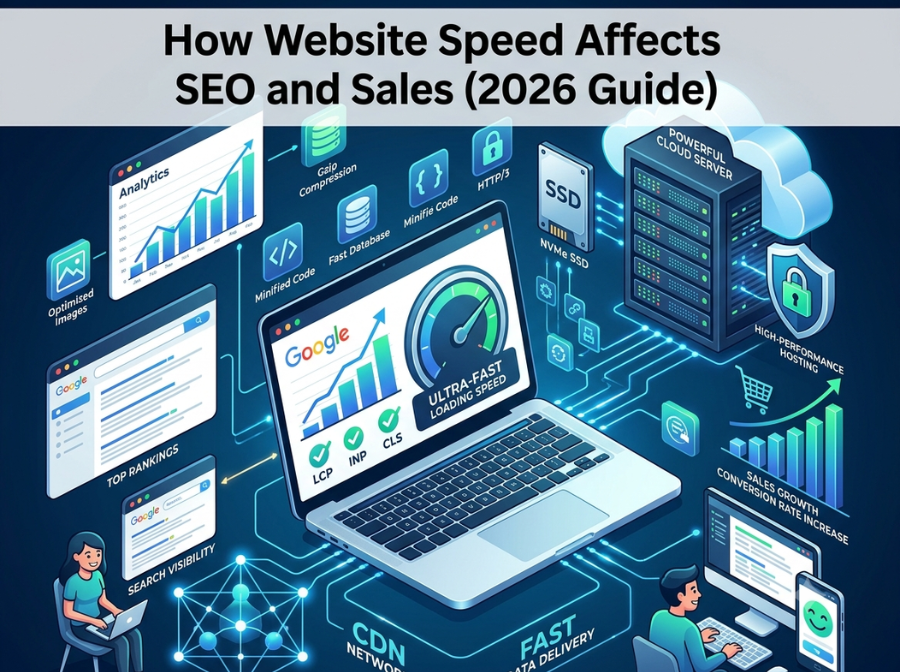
Google measures website performance using Core Web Vitals, including:
- Largest Contentful Paint (LCP)
- Interaction to Next Paint (INP)
- Cumulative Layout Shift (CLS)
Optimizing these metrics improves both SEO and user experience.
4. Better Mobile Rankings
More than half of internet traffic now comes from smartphones.
Mobile users often rely on slower networks, making speed even more critical.
A responsive, fast-loading mobile website improves visibility in Google’s mobile search results.
How Website Speed Affects Sales
Website speed doesn’t just influence search rankings—it directly impacts revenue.
Let’s see how.
Builds Customer Trust
People associate fast websites with professional businesses.
A slow website often appears outdated or unreliable, making visitors hesitant to share personal information or make purchases.
Trust begins with speed.
Increases Conversion Rates
Every second counts.
When pages load quickly, visitors can:
- Browse products easily
- Fill forms faster
- Complete checkout smoothly
- Contact your business without frustration
Even a small improvement in speed can lead to higher conversion rates.
Reduces Cart Abandonment
For eCommerce websites, slow checkout pages are a major reason customers abandon their carts.
A fast checkout process helps retain buyers and increase completed orders.
Encourages Visitors to Explore More Pages
Fast websites create smoother browsing experiences.
Visitors are more likely to:
- Read additional blog posts
- Explore services
- View product categories
- Spend more time on your website
Longer sessions often translate into more sales opportunities.
Common Reasons Your Website Is Slow
Many websites suffer from speed issues because of avoidable mistakes.
Some common causes include:
Large Image Files
Uploading uncompressed images dramatically slows page loading.
Always optimize images before publishing.
Poor Web Hosting
Cheap hosting often struggles during traffic spikes.
Choosing reliable hosting with SSD or NVMe storage significantly improves website performance.
Too Many Plugins
Especially on WordPress websites, installing unnecessary plugins increases page load time.
Keep only essential plugins and remove inactive ones.
Heavy Themes
Feature-rich themes may look attractive but often include excessive code.
Choose lightweight, well-coded themes.
Unoptimized CSS and JavaScript
Large CSS and JavaScript files delay rendering.
Minifying and combining files reduces loading time.
No Browser Caching
Caching allows returning visitors to load pages much faster.
Without caching, browsers download everything again on each visit.
Website Speed Optimization Tips
Improving website speed doesn’t always require a complete redesign.
Here are practical steps that deliver noticeable results.
Optimize Images
Use modern formats such as WebP.
Compress images before uploading without sacrificing quality.
Enable Caching
Browser caching stores website resources locally, reducing future loading times.
Most WordPress caching plugins make this easy.
Use a Content Delivery Network (CDN)
A CDN stores website files across multiple global servers.
Visitors receive content from the nearest server, reducing latency.
Upgrade Your Hosting
Reliable hosting is one of the biggest contributors to website speed.
Choose providers offering:
- NVMe SSD storage
- LiteSpeed servers
- Free CDN
- High uptime
- HTTP/3 support
Minify CSS and JavaScript
Removing unnecessary spaces and unused code reduces file sizes.
Smaller files load faster.
Reduce HTTP Requests
Each script, font, image, and stylesheet requires an additional request.
Combining resources improves performance.
Enable Lazy Loading
Load images only when users scroll to them.
This significantly improves initial page speed.
Tools to Measure Website Speed
Monitoring website performance helps identify improvement opportunities.
Popular tools include:
- Google PageSpeed Insights
- GTmetrix
- Pingdom Website Speed Test
- WebPageTest
- Lighthouse
These tools provide actionable recommendations for improving website performance.
Website Speed Best Practices for WordPress
If your website runs on WordPress, follow these additional recommendations:
- Use lightweight themes
- Install a quality caching plugin
- Optimize your database regularly
- Keep WordPress updated
- Remove unused plugins
- Compress images automatically
- Enable GZIP or Brotli compression
- Use reliable managed WordPress hosting
These simple practices can dramatically improve website speed optimization for WordPress.
The Business Impact of a Faster Website
A fast website creates a positive cycle:
- Better SEO rankings
- More organic traffic
- Higher engagement
- Better user experience
- Increased customer trust
- More leads
- Higher conversion rates
- Greater online sales
Instead of focusing only on attracting more visitors, businesses should also focus on providing a faster browsing experience.
Speed isn’t just a technical metric—it directly influences profitability.
Final Thoughts
Understanding how website speed affects SEO and sales is essential for every website owner in 2026. Search engines reward websites that deliver exceptional user experiences, and visitors expect pages to load almost instantly.
Whether you operate a business website, blog, or eCommerce store, investing in website speed optimization can improve search rankings, reduce bounce rates, strengthen customer trust, and significantly increase conversions.
Regularly monitor your site’s performance, optimize images, choose quality hosting, improve Core Web Vitals, and eliminate unnecessary code. Small speed improvements often produce measurable gains in traffic and revenue.
In today’s competitive digital landscape, a fast website isn’t a luxury—it’s a business advantage.
Recent Comments
Category
- Digital Marketing(52)
- Shopify(17)
- Web Design(17)