Learn the key differences between Local SEO and Traditional SEO. Discover which SEO strategy is best for your business, benefits,
Local SEO vs Traditional SEO – What’s the Difference?
- Home
- Local SEO vs Traditional SEO – What’s the Difference?
Digital Marketing
 By Abhilasha Hayaran
July 16, 2026
By Abhilasha Hayaran
July 16, 2026
Local SEO vs Traditional SEO – What’s the Difference?
By Abhilasha Hayaran
July 16, 2026
If you’re planning to grow your business online in 2026, you’ve probably heard about Local SEO and Traditional SEO. Although both strategies aim to improve your visibility on Google, they serve different purposes and target different audiences.
Understanding the difference between Local SEO vs Traditional SEO helps businesses invest in the right marketing strategy, attract more customers, and increase sales.
In this guide, we’ll explain both SEO methods, compare them, discuss their benefits, and help you decide which one is best for your business.
What is Local SEO?
Local SEO (Local Search Engine Optimization) is the process of optimizing your online presence to attract customers from a specific geographic location.
For example, when someone searches:
- Website Designer near me
- Best Digital Marketing Agency in Gwalior
- Dentist in Delhi
- Coffee Shop near me
Google displays businesses based on their location and relevance.
Local SEO focuses on improving rankings in:
- Google Maps
- Google Business Profile
- Local Search Results
- “Near Me” Searches
It is ideal for businesses that serve customers in specific cities or regions.
Examples include:
- Restaurants
- Clinics
- Law Firms
- Salons
- Real Estate Agencies
- Website Design Companies
- Digital Marketing Agencies
What is Traditional SEO?
Traditional SEO focuses on improving your website’s ranking for broader keywords without targeting a specific location.
For example:
- Best SEO Tools
- How to Start a Blog
- WordPress Hosting Guide
- Digital Marketing Tips
These keywords are searched globally or nationally rather than locally.
Traditional SEO aims to generate organic traffic from users regardless of their location.
It involves optimizing:
- Website Content
- Blog Articles
- Landing Pages
- Technical SEO
- Backlinks
- Keyword Strategy
Traditional SEO works best for:
- SaaS Companies
- E-commerce Stores
- Bloggers
- News Websites
- Online Service Providers
- Educational Platforms
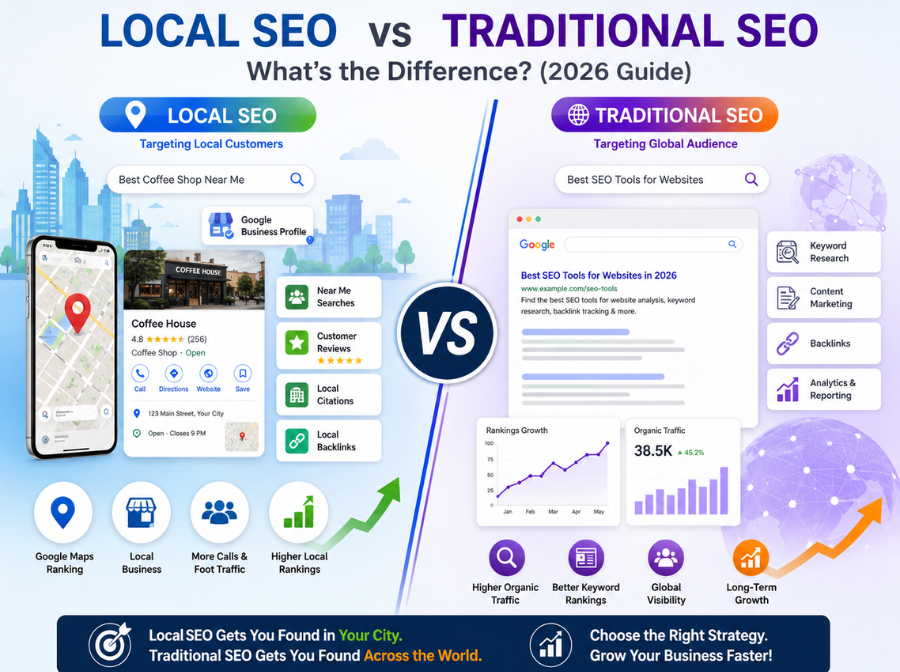
Local SEO vs Traditional SEO: Key Differences
| Feature | Local SEO | Traditional SEO |
|---|---|---|
| Target Audience | Local Customers | Global/National Audience |
| Location-Based | Yes | No |
| Google Maps Ranking | Yes | No |
| Google Business Profile | Essential | Optional |
| “Near Me” Searches | Important | Not Relevant |
| Local Citations | Required | Not Required |
| Organic Blog Ranking | Limited | Very Important |
| Best For | Local Businesses | Online Businesses |
How Local SEO Works
Local SEO relies heavily on location signals.
Google considers factors like:
Google Business Profile
A fully optimized Google Business Profile helps your business appear in:
- Google Maps
- Local Pack
- Local Search Results
Customer Reviews
Positive reviews improve:
- Trust
- Click-through rate
- Local rankings
Businesses with consistent 4.5+ ratings generally perform better.
NAP Consistency
NAP stands for:
- Name
- Address
- Phone Number
Your business details should remain identical across all directories.
Local Keywords
Examples:
- Website Design Company in Gwalior
- SEO Services in Jaipur
- Best Dentist in Noida
Adding city-specific keywords helps Google understand your service area.
Local Backlinks
Links from local newspapers, business directories, and nearby organizations strengthen local authority.
How Traditional SEO Works
Traditional SEO focuses more on website authority and content quality.
Key ranking factors include:
Keyword Research
Target informational keywords like:
- What is SEO?
- Best Hosting Company
- WordPress Guide
High-Quality Content
Publishing useful blogs consistently helps build topical authority.
Technical SEO
Includes:
- Fast Website Speed
- Mobile-Friendly Design
- Secure HTTPS
- Core Web Vitals
- Structured Data
Link Building
High-quality backlinks from trusted websites increase domain authority.
Content Optimization
Every page should include:
- Meta Title
- Meta Description
- Heading Structure
- Internal Links
- Optimized Images
Advantages of Local SEO
Local SEO provides several benefits for businesses serving nearby customers.
Increased Foot Traffic
Customers searching nearby are more likely to visit your physical location.
Higher Conversion Rate
Local searches often indicate strong buying intent.
Example:
“Best Web Designer Near Me”
This search usually comes from someone ready to hire.
Better Google Maps Visibility
Appearing in the Local Pack dramatically increases clicks.
Affordable Marketing
Compared to paid advertising, Local SEO offers long-term results at a lower cost.
More Phone Calls
Optimized Google Business Profiles generate:
- Calls
- Website Visits
- Direction Requests
Advantages of Traditional SEO
Traditional SEO also delivers long-term value.
Benefits include:
- Nationwide visibility
- Higher website traffic
- Better brand authority
- Increased organic leads
- Long-term rankings
- Better ROI over time
It is particularly effective for businesses selling products or services online.
Which Businesses Need Local SEO?
Local SEO is perfect for:
- Restaurants
- Doctors
- Dentists
- Fitness Centers
- Hotels
- Electricians
- Plumbers
- Lawyers
- Real Estate Agents
- Digital Marketing Agencies
- Website Design Companies
If customers visit your office or you serve a specific area, Local SEO is essential.
Which Businesses Need Traditional SEO?
Traditional SEO is best for:
- E-commerce Stores
- Bloggers
- Affiliate Websites
- SaaS Companies
- Online Courses
- National Brands
- Software Companies
- News Websites
If your audience isn’t limited to one location, Traditional SEO is the better strategy.
Can You Use Both Together?
Absolutely.
Many businesses combine both strategies for maximum visibility.
For example:
A website design company in Gwalior can:
- Rank locally for Website Designer in Gwalior
- Rank nationally for Website Design Tips
- Publish SEO blogs
- Optimize Google Business Profile
- Build backlinks
- Create location pages
This combination attracts both local clients and nationwide traffic.
Best Practices for Local SEO in 2026
Follow these proven strategies:
- Optimize Google Business Profile
- Collect genuine customer reviews
- Use local keywords naturally
- Create city-specific landing pages
- Build local citations
- Add LocalBusiness Schema
- Maintain NAP consistency
- Publish locally relevant blog content
- Optimize for mobile users
- Improve website speed
Best Practices for Traditional SEO in 2026
To improve nationwide rankings:
- Publish high-quality content regularly
- Target search intent
- Build authoritative backlinks
- Improve Core Web Vitals
- Optimize images
- Use internal linking
- Implement structured data
- Focus on E-E-A-T (Experience, Expertise, Authoritativeness, Trustworthiness)
- Refresh older content
- Monitor performance with Google Search Console and Analytics
Final Thoughts
When comparing Local SEO vs Traditional SEO, there is no universal winner—it depends on your business goals.
If you serve customers in a specific city or region, Local SEO helps you appear in Google Maps, local searches, and “near me” results, bringing highly targeted leads.
If your goal is to attract visitors from across the country or around the world, Traditional SEO is the better choice, helping you build long-term organic traffic through quality content and technical optimization.
For many businesses, the most effective approach is combining both strategies. A balanced SEO plan allows you to dominate local search while also expanding your online reach, increasing visibility, qualified traffic, and conversions over time.
Investing in the right SEO strategy today will help your business stay competitive and continue growing in 2026 and beyond.
Recent Comments
Category
- Digital Marketing(52)
- Shopify(17)
- Web Design(17)