Discover why having a business website is essential in 2026, even if you're active on social media. Learn the key differences,
Website vs Social Media: Why Every Business Needs a Website in 2026
- Home
- Website vs Social Media: Why Every Business Needs a Website in 2026
Digital Marketing
 By Abhilasha Hayaran
July 03, 2026
By Abhilasha Hayaran
July 03, 2026
Website vs Social Media: Why Every Business Needs a Website in 2026
By Abhilasha Hayaran
July 03, 2026
In 2026, having a strong online presence is no longer optional for businesses—it’s essential. Many business owners, startups, and local entrepreneurs often ask a common question: “Do I really need a website if I already have social media accounts?”
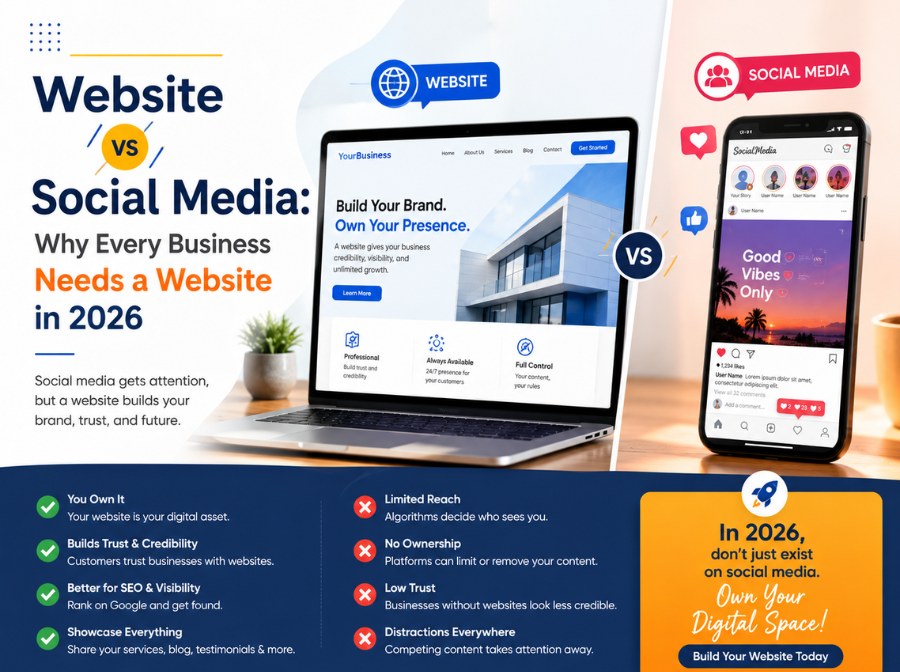
While social media platforms have become powerful marketing tools, relying solely on them can limit your business growth. A professional website remains the foundation of a successful digital presence. Social media helps you reach audiences, but your website gives you complete control over your brand, customers, and business operations.
In this article, we’ll explore the differences between websites and social media, explain why every business needs a website in 2026, and show how combining both can help your business grow faster.
Understanding the Difference Between a Website and Social Media
Before deciding where to invest your time and money, it’s important to understand what each platform actually does.
What Is a Business Website?
A business website is your own digital property. You own the domain, control the content, manage the design, and decide how customers interact with your brand.
A website can include:
- Company information
- Products and services
- Contact details
- Online booking systems
- E-commerce stores
- Blogs and articles
- Customer testimonials
- Portfolio and case studies
Your website acts as your business headquarters on the internet.
What Is Social Media?
Social media platforms allow businesses to connect with audiences through content, advertising, and engagement.
Popular social media platforms include:
- YouTube
- X (formerly Twitter)
Social media helps businesses build awareness and communicate with customers, but businesses do not own these platforms.
The Biggest Problem with Relying Only on Social Media
Many businesses believe that having an Instagram page or Facebook account is enough. However, social media platforms have several limitations.
You Don’t Own Your Audience
Social media companies control who sees your content. Their algorithms decide how many people will actually view your posts.
If a platform changes its algorithm, your reach can drop overnight.
Accounts Can Be Restricted or Suspended
Businesses sometimes lose access to their accounts due to technical issues, policy violations, or hacking incidents. Without a website, this can completely disrupt customer communication.
Limited Branding Opportunities
Social media profiles offer limited customization. Every business page looks similar, making it harder to build a unique brand identity.
High Advertising Costs
Organic reach on social media continues to decline. Businesses often need to spend money on advertisements to reach their own followers.
Why Every Business Needs a Website in 2026
A professional website offers several advantages that social media simply cannot replace.
1. A Website Builds Trust and Credibility
Today’s customers expect legitimate businesses to have a professional website.
When potential customers search for your business online, they often look for:
- Your website
- Contact information
- Customer reviews
- Service details
- Company history
Without a website, customers may question your credibility.
A well-designed website immediately creates a professional impression and builds trust.
2. You Have Complete Control Over Your Business
Unlike social media platforms, a website belongs entirely to you.
With your own website, you control:
- Design and branding
- Customer experience
- Content publishing
- SEO strategy
- Marketing campaigns
- Lead generation
- Analytics and customer data
This level of control is essential for long-term business growth.
3. Websites Help Businesses Rank on Google
One of the biggest advantages of having a website is search engine optimization (SEO).
People search Google every day using terms like:
- “Best dentist near me”
- “Website developer in my city”
- “Digital marketing agency”
- “Online coaching classes”
Without a website, your business misses these valuable opportunities.
An SEO-optimized website helps your business:
- Appear in Google search results
- Generate organic traffic
- Attract high-quality leads
- Build long-term visibility
Unlike social media posts, website content can continue generating traffic for years.
4. Your Website Works 24/7
A website never closes.
Even when you’re sleeping, your website can:
- Generate leads
- Accept inquiries
- Sell products
- Schedule appointments
- Answer customer questions
- Showcase your services
Think of your website as a salesperson who works continuously without taking a break.
5. Websites Improve Brand Authority
Professional businesses invest in their online presence.
A website allows you to establish authority by publishing:
- Educational blogs
- Industry insights
- Case studies
- Customer success stories
- Service guides
- Frequently asked questions
This content positions your business as an expert in your industry.
6. A Website Generates Better Quality Leads
Social media often attracts casual visitors.
Website visitors, however, usually have stronger purchase intent because they actively searched for your products or services.
With a website, you can:
- Collect inquiries
- Generate phone calls
- Capture email addresses
- Offer consultations
- Create sales funnels
- Track conversions
This makes websites highly effective for business growth.
Website vs Social Media: Which Is Better?
The answer is simple: you need both.
Feature | Website | Social Media |
|---|---|---|
Ownership | Full control | Platform controlled |
| Branding | Complete customization | Limited customization |
| SEO Benefits | Excellent | Limited |
| Lead Generation | High | Moderate |
| Long-Term Value | Very high | Medium |
| Customer Engagement | Moderate | Excellent |
| Organic Reach | Strong with SEO | Declining |
| Credibility | Very high | Medium |
The smartest businesses use social media to attract attention and websites to convert visitors into customers.
How Social Media and Websites Work Together
Instead of choosing one over the other, successful businesses combine both platforms strategically.
A typical customer journey looks like this:
Step 1:
Customer discovers your business through social media.
Step 2:
They visit your website for more information.
Step 3:
They read reviews, services, and pricing.
Step 4:
They contact you or make a purchase.
This approach creates a powerful digital marketing ecosystem.
Industries That Need Websites the Most in 2026
Almost every business benefits from having a website, including:
- Local businesses
- Doctors and healthcare professionals
- Real estate agencies
- Restaurants and cafes
- Educational institutes
- Lawyers and consultants
- Freelancers
- Manufacturers
- Retail stores
- Digital agencies
- Service providers
- Startups and entrepreneurs
Regardless of industry, customers expect businesses to have an online presence they can trust.
Common Myths About Business Websites
“Social media is enough.”
Social media supports marketing, but it cannot replace a professional website.
“Websites are expensive.”
Modern website platforms have made professional websites more affordable than ever.
“I don’t need SEO.”
Without SEO, your competitors will attract customers who could have found your business.
“My business is too small.”
Small businesses often benefit the most from having a professional online presence.
Final Thoughts
In 2026, social media remains an important marketing channel, but it should never be your only digital asset. Algorithms change, platforms evolve, and accounts can disappear overnight.
A professional website gives your business something social media never can: ownership, credibility, visibility, and long-term growth potential.
The most successful businesses don’t choose between a website and social media—they use both strategically. Social media helps customers discover your brand, while your website converts visitors into loyal customers.
If you’re serious about growing your business online in 2026, investing in a professional website is no longer a luxury—it’s a necessity.
Recent Comments
Category
- Digital Marketing(52)
- Shopify(17)
- Web Design(17)