Avoid costly website mistakes that can hurt your business. Discover the top 10 mistakes to avoid while creating a business
Top 10 Mistakes to Avoid While Creating a Business Website
- Home
- Top 10 Mistakes to Avoid While Creating a Business Website
Digital Marketing
 By Abhilasha Hayaran
July 04, 2026
By Abhilasha Hayaran
July 04, 2026
Top 10 Mistakes to Avoid While Creating a Business Website
By Abhilasha Hayaran
July 04, 2026
In today’s digital world, your website is often the first interaction potential customers have with your business. Whether you’re a startup, small business owner, freelancer, or established company, having a professional website is essential for building trust, generating leads, and growing your brand online.
However, creating a business website isn’t just about choosing a design and publishing content. Many businesses make critical mistakes during the website development process that negatively impact user experience, search engine rankings, and conversion rates.
A poorly designed website can cost you customers, reduce your credibility, and limit your business growth.
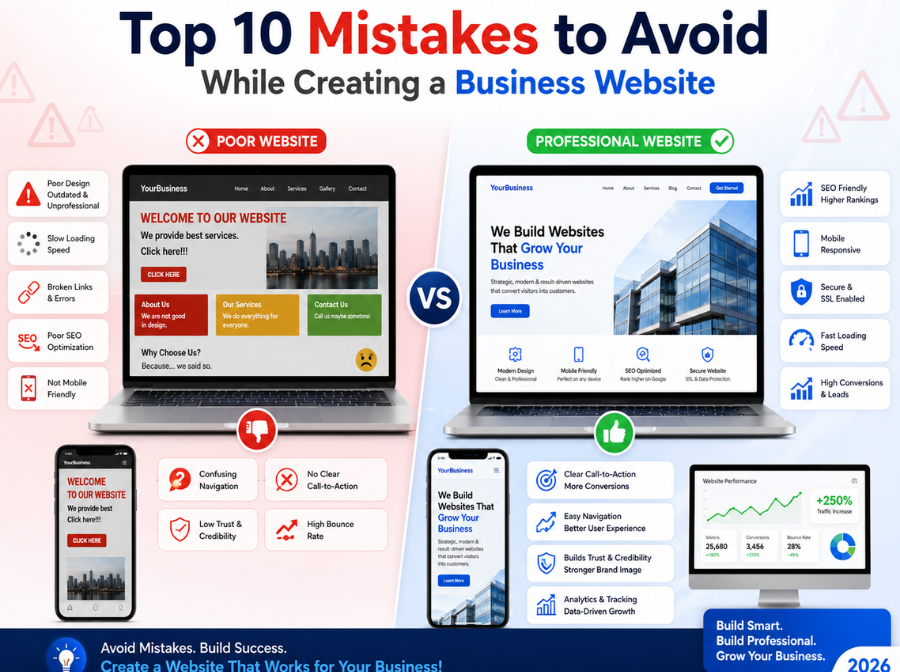
In this guide, we’ll discuss the top 10 mistakes to avoid while creating a business website and explain how you can build a website that attracts visitors and converts them into customers.
Why Your Business Website Matters
Your website is your digital storefront. It works 24/7 to represent your brand, provide information, and generate business opportunities.
A successful business website helps you:
- Build trust and credibility
- Improve search engine visibility
- Generate leads and sales
- Showcase products and services
- Strengthen your brand identity
- Connect with potential customers
Avoiding common website mistakes can significantly improve your chances of online success.
1. Not Defining Clear Website Goals
One of the biggest mistakes businesses make is creating a website without a clear purpose.
Before building your website, ask yourself:
- What do you want visitors to do?
- Generate leads?
- Sell products?
- Book appointments?
- Build brand awareness?
- Share information?
Without clear objectives, your website may confuse visitors and fail to achieve business goals.
Solution:
Define your website’s primary purpose before designing or developing it. Every page should support that objective.
2. Choosing Poor Website Design
Your website design creates the first impression of your business.
An outdated, cluttered, or unprofessional website can drive visitors away within seconds.
Common design mistakes include:
- Too many colors
- Poor typography
- Excessive animations
- Cluttered layouts
- Inconsistent branding
Remember that visitors judge your business based on your website appearance.
Solution:
Choose a clean, modern, and professional design that reflects your brand identity and improves user experience.
3. Ignoring Mobile Responsiveness
More than half of all website traffic now comes from mobile devices.
If your website doesn’t work properly on smartphones and tablets, you’re losing customers and hurting your search engine rankings.
Common mobile issues include:
- Text that’s too small
- Buttons that are difficult to click
- Slow loading pages
- Broken layouts
- Poor navigation
Solution:
Use a fully responsive website design that adapts seamlessly to all screen sizes and devices.
4. Slow Website Loading Speed
Website speed directly affects user experience, conversions, and SEO performance.
Research consistently shows that users leave websites that take too long to load.
Common causes of slow websites include:
- Large image files
- Poor hosting services
- Excessive plugins
- Unoptimized code
- Too many scripts
A slow website not only frustrates users but can also lower your Google rankings.
Solution:
Improve your website speed by:
- Compressing images
- Using quality hosting
- Enabling caching
- Minimizing unnecessary plugins
- Optimizing website code
5. Poor Navigation Structure
Visitors should be able to find information quickly and easily.
Complicated navigation creates confusion and increases bounce rates.
Common navigation mistakes include:
- Too many menu items
- Hidden navigation menus
- Confusing page labels
- Poor internal linking
- Lack of search functionality
If users can’t find what they’re looking for, they’ll leave your website.
Solution:
Create a simple navigation structure with clear menus and logical page organization.
6. Ignoring Search Engine Optimization (SEO)
Many businesses launch beautiful websites that never receive traffic because they ignore SEO.
Without search engine optimization, potential customers may never find your website.
Common SEO mistakes include:
- Missing title tags
- No meta descriptions
- Poor keyword research
- Duplicate content
- Missing image optimization
- Weak internal linking
Solution:
Implement SEO best practices from the beginning by:
- Conducting keyword research
- Creating optimized content
- Writing meta titles and descriptions
- Using heading tags correctly
- Building internal links
- Optimizing images
SEO should be part of your website strategy, not an afterthought.
7. Weak or Missing Calls-to-Action (CTAs)
Many websites provide information but fail to guide visitors toward taking action.
Examples of effective calls-to-action include:
- Contact Us
- Request a Quote
- Book an Appointment
- Download Now
- Get Started
- Call Today
Without clear CTAs, visitors may leave without converting.
Solution:
Place strong calls-to-action throughout your website, including:
- Homepage
- Service pages
- Blog posts
- Landing pages
- Contact pages
Make it easy for users to take the next step.
8. Using Low-Quality Content
Content is one of the most important factors for both SEO and user engagement.
Poor-quality content can damage your credibility and reduce conversions.
Common content mistakes include:
- Grammatical errors
- Thin content
- Duplicate content
- Keyword stuffing
- Poor formatting
- Outdated information
Visitors expect helpful, accurate, and professional content.
Solution:
Create content that is:
- Informative
- Original
- Easy to read
- SEO optimized
- Valuable to your audience
High-quality content helps establish your authority and improve search rankings.
9. Not Building Trust and Credibility
Customers need confidence before doing business with you.
Many websites fail to include trust-building elements.
Examples include:
- Customer testimonials
- Reviews
- Case studies
- Certifications
- Awards
- Business information
- Contact details
- Security badges
Without trust signals, visitors may hesitate to contact or purchase from you.
Solution:
Add credibility elements throughout your website to reassure potential customers.
10. Failing to Maintain and Update the Website
Launching a website is only the beginning.
Many businesses neglect their websites after publication, resulting in:
- Broken links
- Security vulnerabilities
- Outdated content
- Poor performance
- SEO decline
An outdated website creates a negative impression and can become a security risk.
Solution:
Regularly maintain your website by:
- Updating plugins and software
- Refreshing content
- Monitoring performance
- Fixing broken links
- Performing security checks
- Publishing new blog content
Consistent maintenance ensures long-term success.
Bonus Tip: Don’t Ignore Website Security
Cybersecurity threats continue to increase every year.
Businesses should invest in:
- SSL certificates
- Strong passwords
- Website backups
- Security plugins
- Malware protection
- Firewall solutions
A secure website protects both your business and your customers.
Final Thoughts
Creating a successful business website requires more than attractive design. Your website must provide a great user experience, support SEO, build trust, and help visitors achieve their goals.
To recap, avoid these common mistakes:
- Not defining clear goals
- Poor website design
- Ignoring mobile responsiveness
- Slow loading speed
- Poor navigation
- Neglecting SEO
- Weak calls-to-action
- Low-quality content
- Lack of trust signals
- Failing to maintain the website
By avoiding these mistakes, you’ll create a professional, high-performing website that supports your business growth, improves search engine rankings, and converts visitors into loyal customers.
Remember, your website is one of your most valuable business assets. Invest the time and effort to build it correctly, and it will continue delivering results for years to come.
Recent Comments
Category
- Digital Marketing(52)
- Shopify(17)
- Web Design(17)